THE FIRST ROUND / A LOW-PRESSURE START
A practice turn
is an invitation.
Tell the table what a round will demonstrate and whether it counts towards the final score. Make that agreement before the first move.
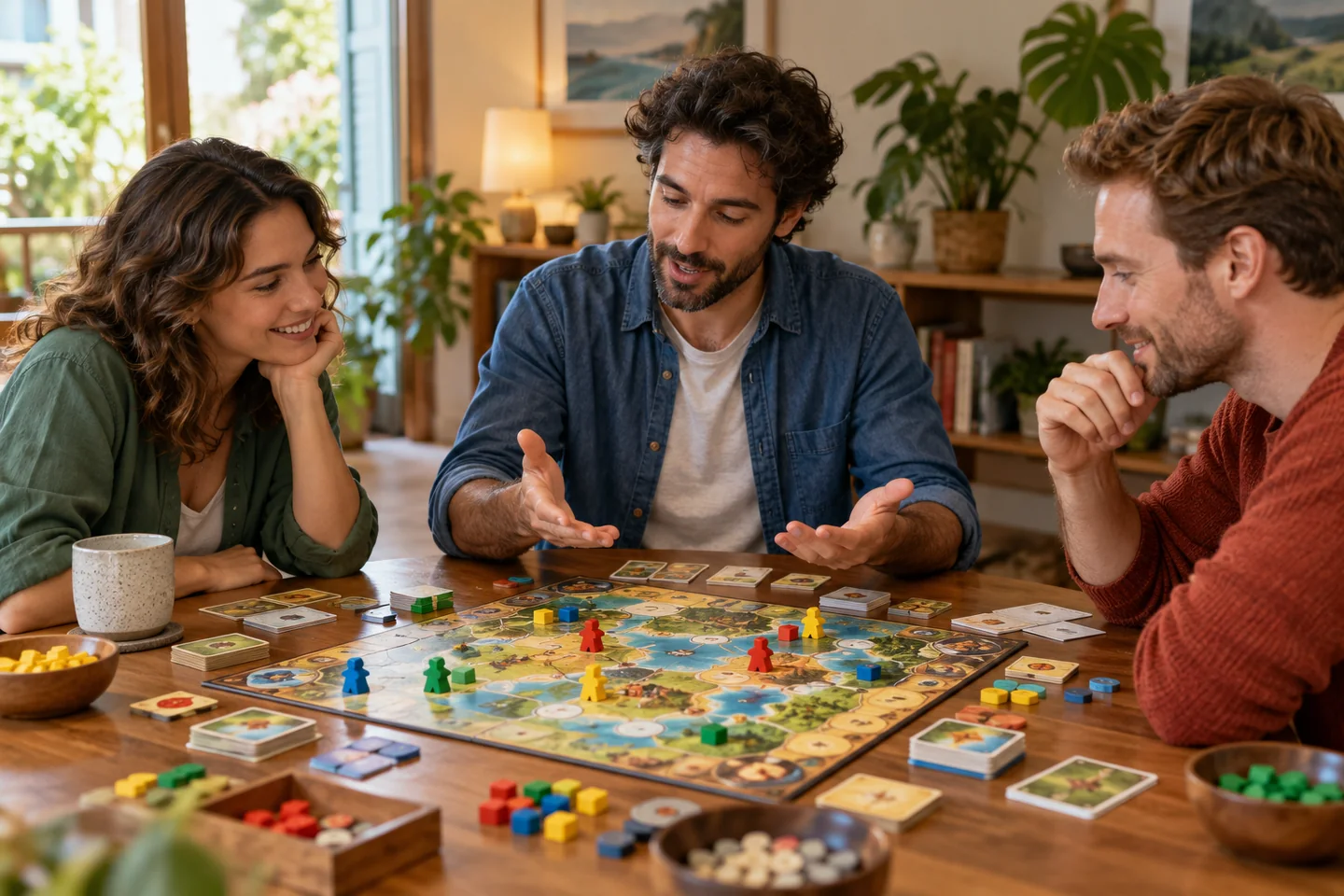
Teach in a useful order
- The purpose. Explain the shared aim or how an individual score is earned.
- The choice. Show the actions available on a normal turn.
- The consequence. Move the pieces, update the example score and point out what changed.
- The handover. Show when the next person begins and how a round finishes.
AN INFORMAL FIRST-TURN CHOOSER
One less
tiny decision.
Enter 2–8 different first names or nicknames, one per line. The chooser selects one entry using the browser’s random number generator. It is for casual play; follow a game’s official starting rule when needed.
Names stay on this page and are not saved or submitted. Reloading clears the list.
Let the example do its job
Pause after the first complete turn and invite a question. A learner does not need to explain every exception back to the host before being allowed to play.
If the group restarts, reset all example resources and scores. If you continue, make sure everyone understands which practice decisions remain in effect.
When someone makes an early mistake
Agree a friendly correction while the consequences are still easy to reverse. Consistent, clear expectations are more useful than a surprise penalty in a learning round.