HOW GAMES WORK / FOUR STARTING POINTS
Learn the rhythm.
Then read the rules.
A mechanic describes a kind of decision. Most published games combine several, so these notes are a vocabulary aid rather than a substitute rulebook.
Co-operation
A shared objective gives everyone a reason to discuss the same problem.
When you teach it
Invite suggestions before settling on a plan. Shared goals do not mean one person should direct every move.

Drafting
Players select from a changing set of options, often passing the rest onwards.
When you teach it
Show what is kept and what is passed. Explain when a selected item takes effect.
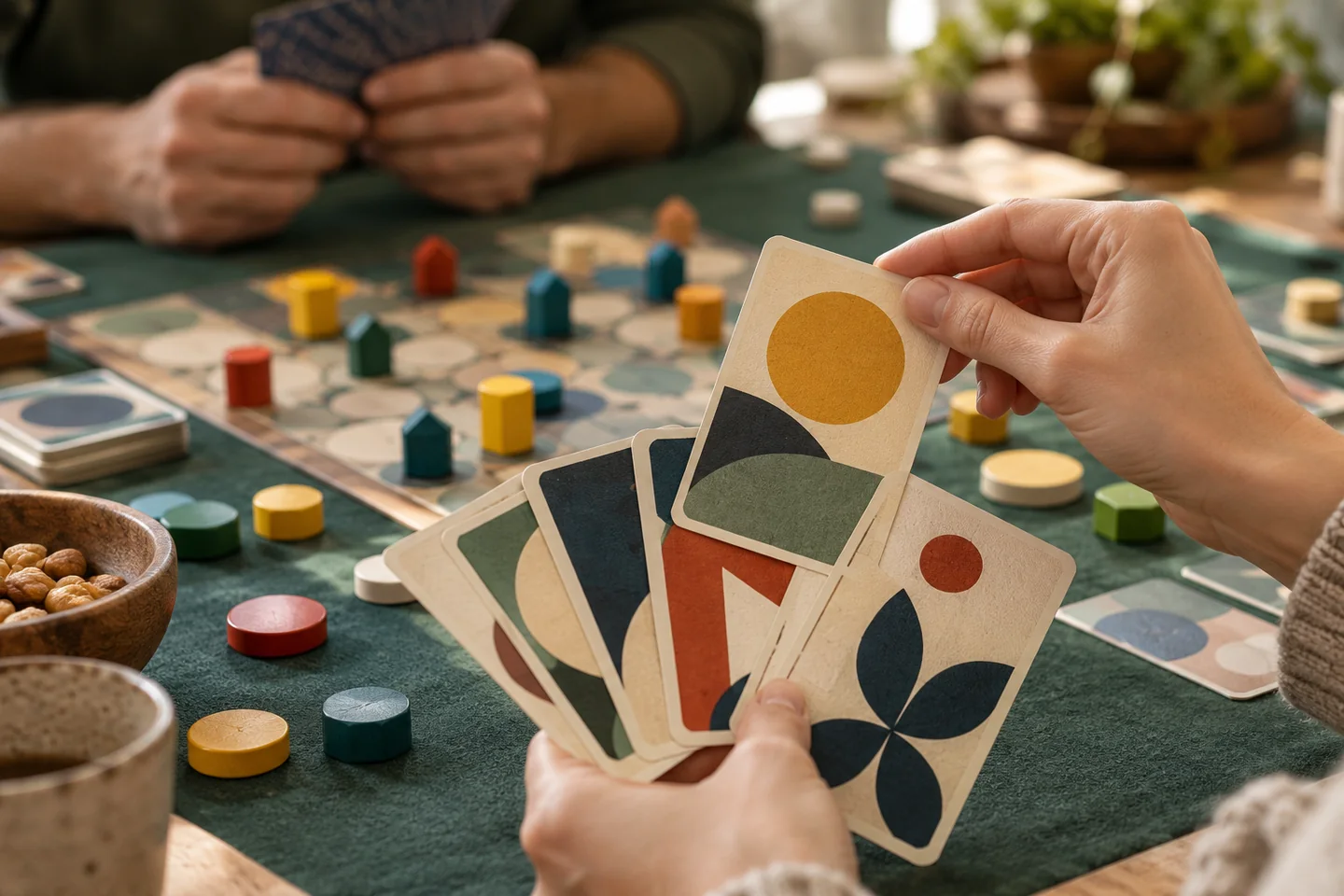
Tile placement
A new piece changes a shared or personal arrangement. Position creates the decision.
When you teach it
Demonstrate a legal placement and a contrasting illegal one. Keep the visible rule simple before adding scoring details.
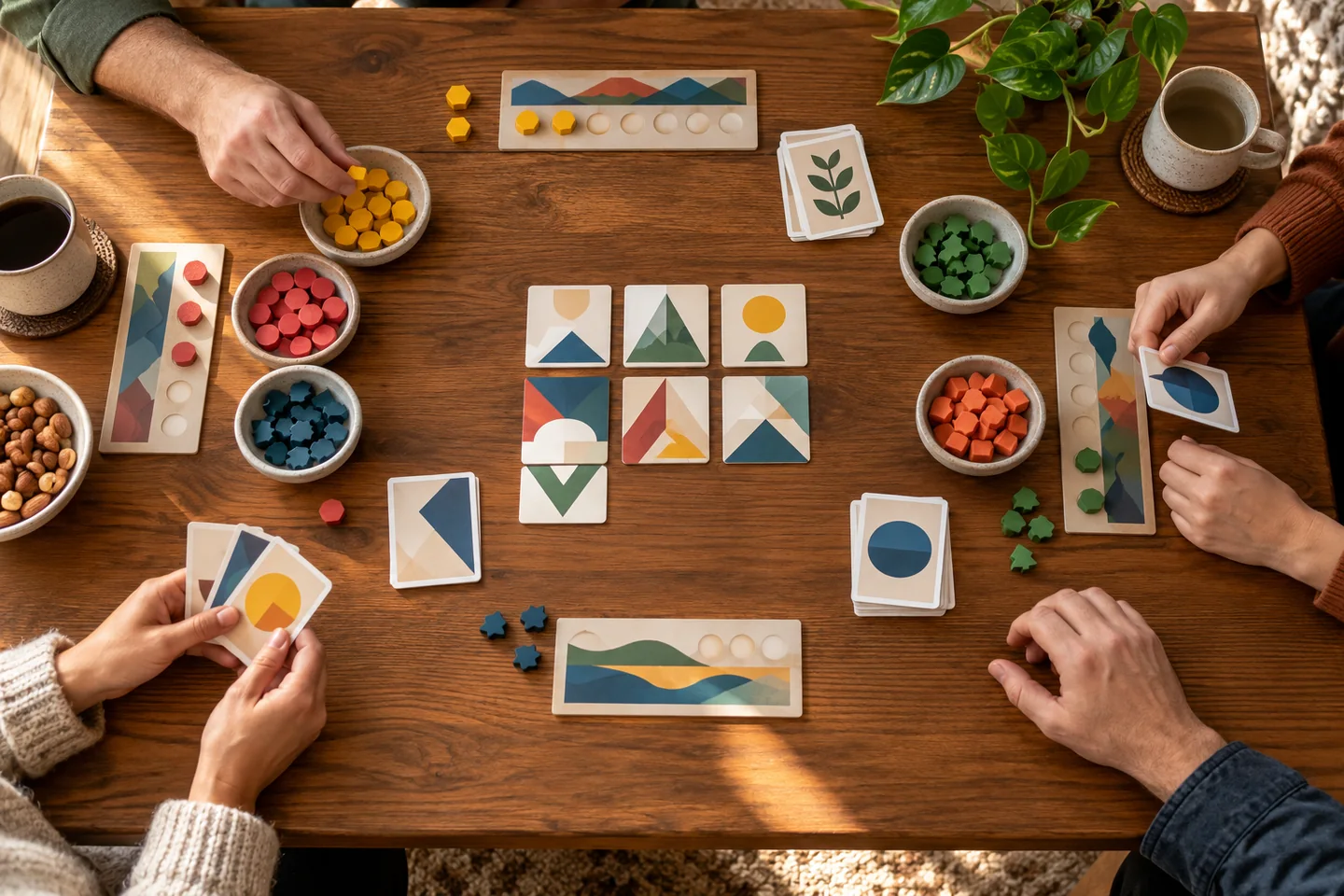
Set collection
Pieces become valuable because of their relationship to other pieces.
When you teach it
Lay out a small scoring example. A visible pattern is often easier to understand than a spoken formula.
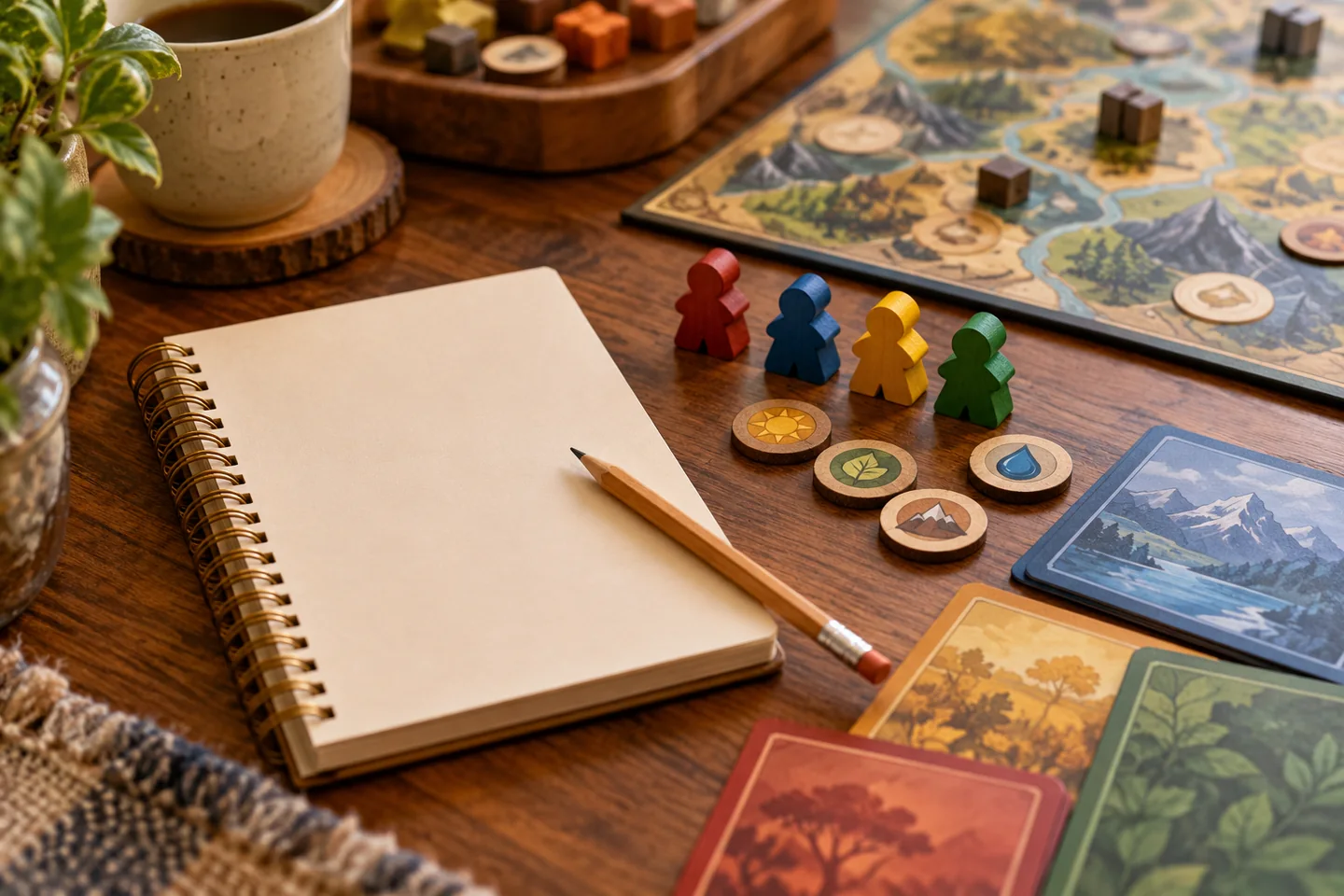
One label is never the whole game
Theme, reading load, turn length and scoring can change how the same mechanic feels. Ask what players actually do on a turn, then check the particular title’s player count and rules.
Compare formats for your table