Ask about time
Agree when you need to finish. Include the teach and a little packing-up time, not only the duration printed on a box.
THE TABLE CHARTER / AUSTRALIA
Make space for the people, the rules and a proper cuppa. A practical field guide to bringing a table together.

THE FIRST AGREEMENT
A small weeknight catch-up and a long Sunday session ask different things of a game. Player count matters, but so do energy, interruptions and how much explaining everyone wants.
Choose a format that fits the evening. A shorter game with room for another round can be a better starting point than a box that fills every available minute.
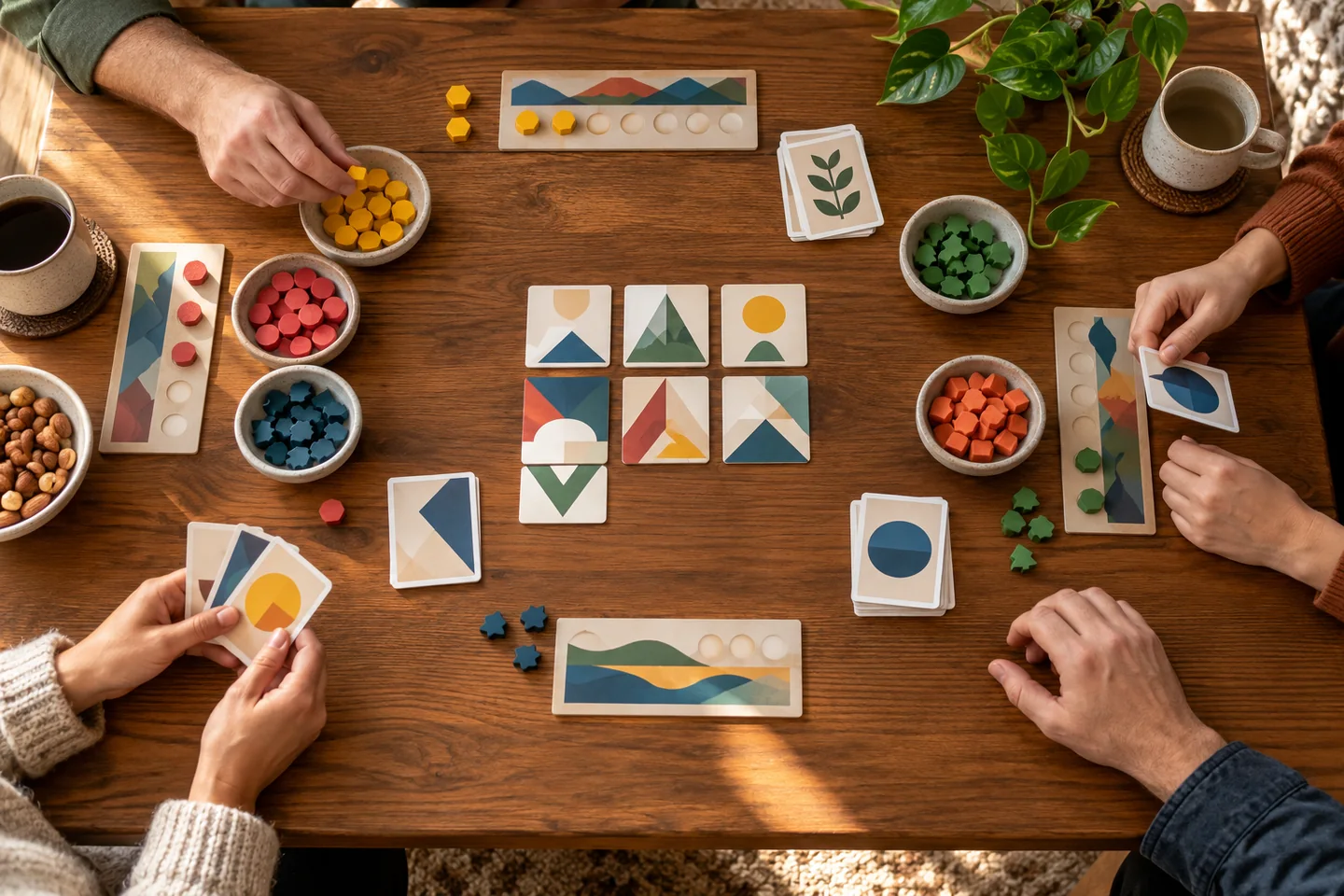
01 / MAKE ROOM
Put drinks where an enthusiastic reach will not knock them over. Give each person enough room to see the shared board and manage their own pieces.
Keep the box lid and unused components off the playing surface. Clear space makes the first explanation easier to follow.
Open the hosting checklist ↗Agree when you need to finish. Include the teach and a little packing-up time, not only the duration printed on a box.
A busy day may call for a lighter decision load. Offer a choice without asking anyone to justify how tired they feel.
Check lighting, reading size and comfortable seating. Let people describe what helps them enjoy the table.
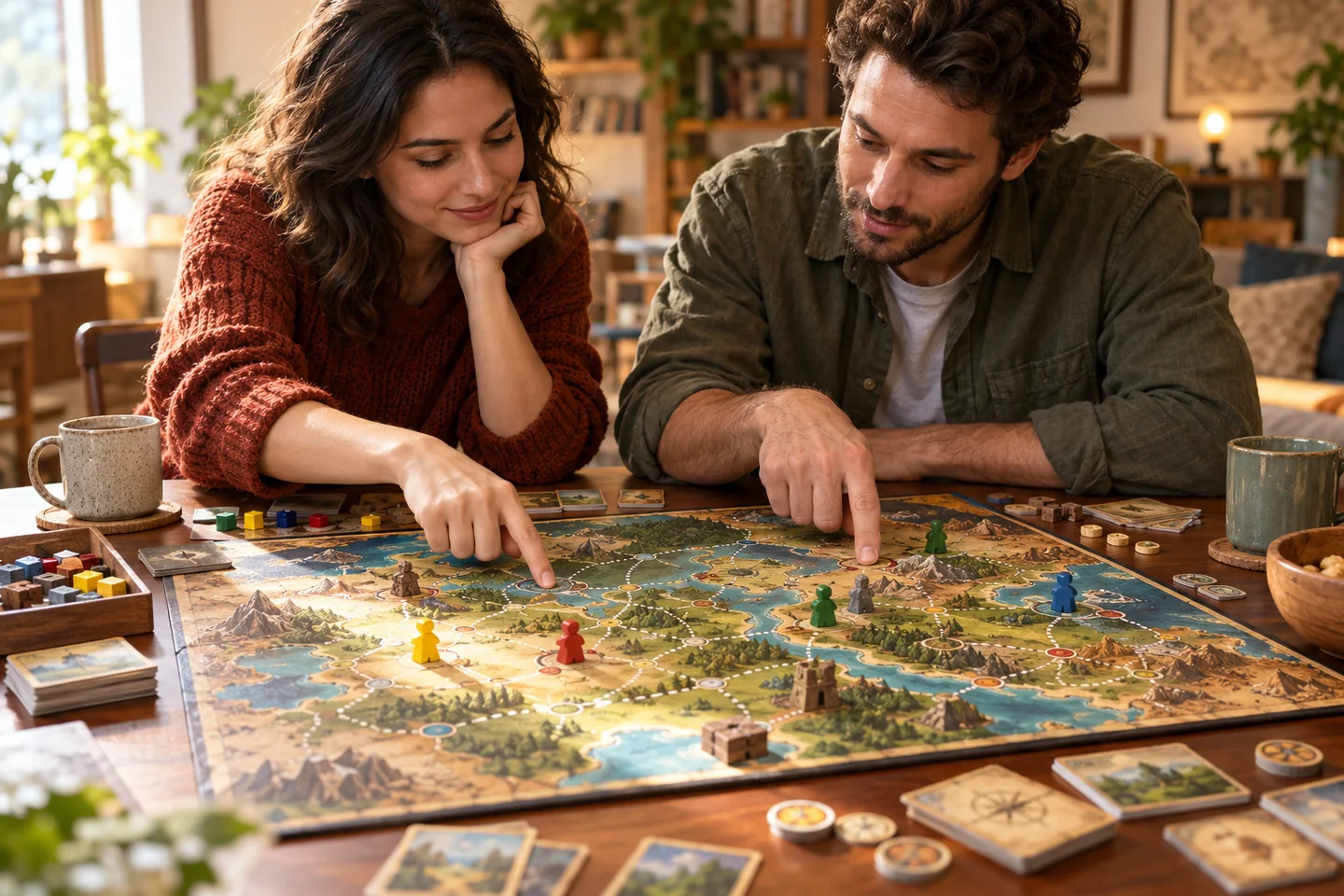
Work towards a common goal. Make room for each person’s idea so the most confident voice does not take every turn.
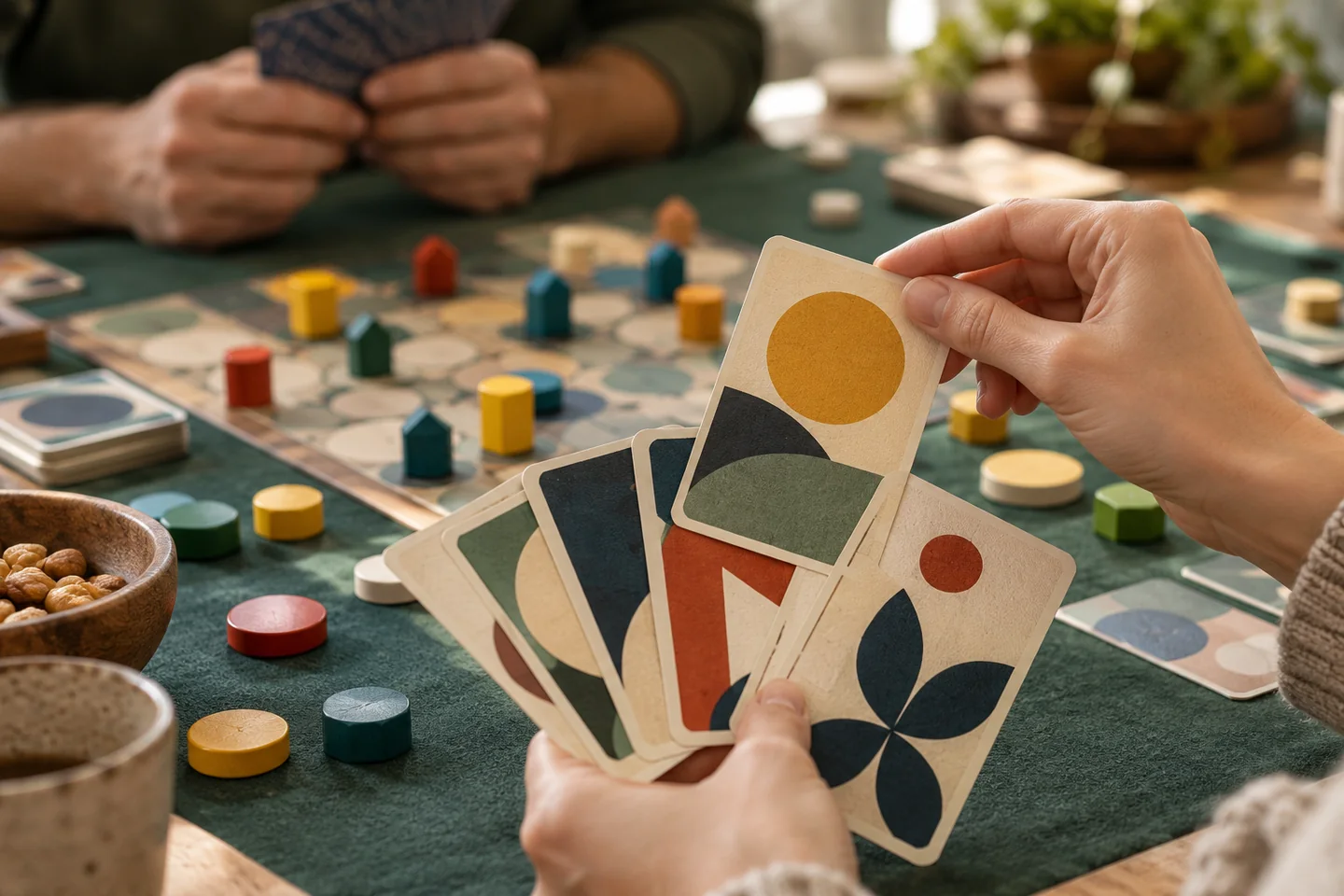
Select something, then pass on the remaining options. A visible choice can teach the rhythm quickly.
A USEFUL DISTINCTION
Learning time and decision depth are different. A game with a tiny rulebook may reward careful planning; a longer explanation may introduce a very friendly turn structure.
Understand the mechanics ↗03 / BEGIN TOGETHER
Explain what everyone is trying to achieve, show the few actions available, and demonstrate how a turn ends. Add exceptions when they become relevant.
A practice round can remove the pressure to remember everything at once. Agree whether you will restart before scoring begins.
Plan the first round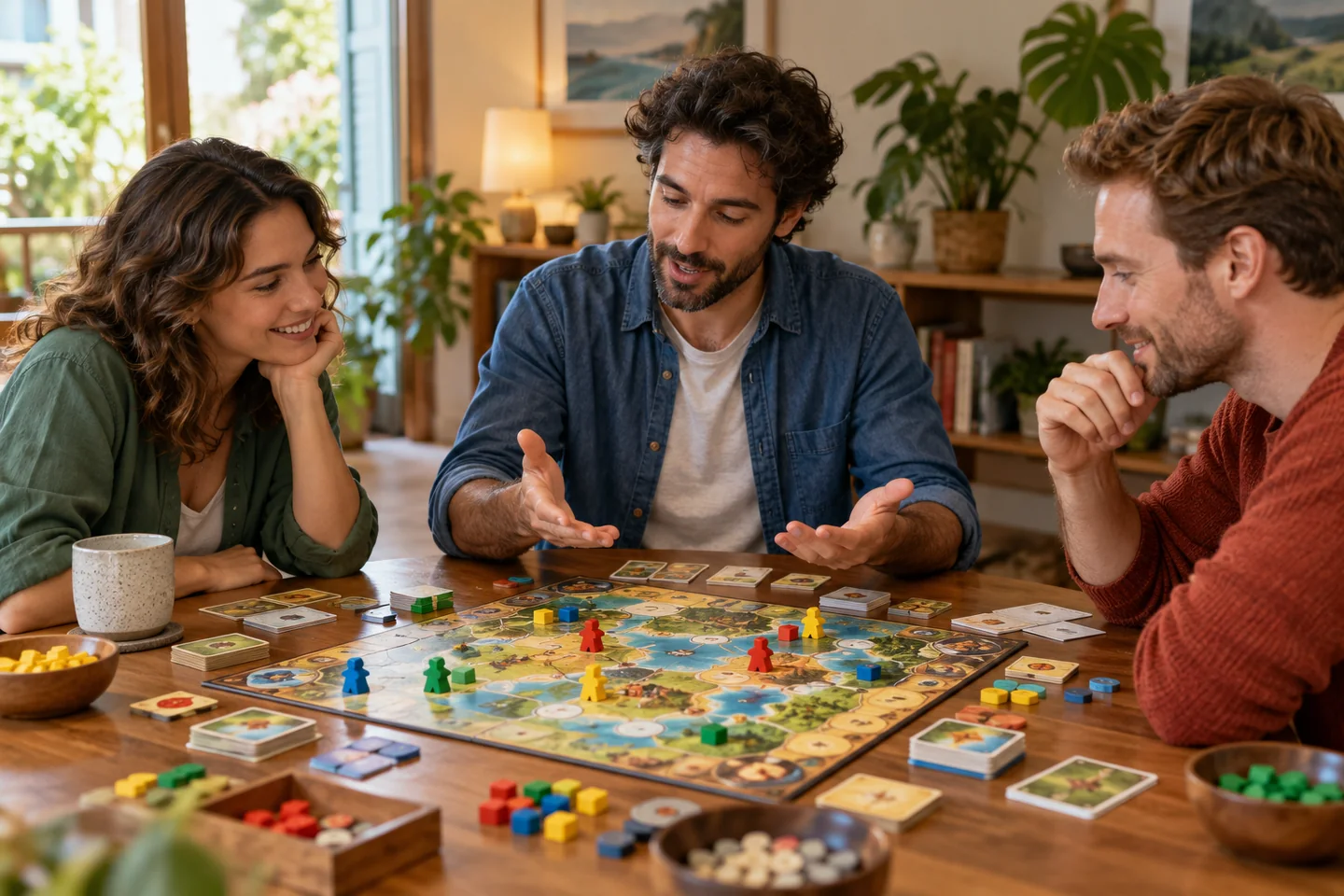

Move shared information where everyone can read it. Read a card aloud when helpful, describe colours with position or symbols, and ask before moving another person’s pieces.
THE PAUSE IS PART OF THE PLAN

Agree a pause between rounds or at a natural stopping point. A break gives people time to reset without rushing the next decision.
For longer sessions, check whether the group still wants another round. Finishing while everyone is comfortable is a perfectly good result.
READ THE BOX WITH CONTEXT
Check the published player range, language needs and suggested age with the actual game’s rules or publisher. Our format tool does not certify a title for a particular group.
How to read your results ↗
04 / MAKE A NOTE
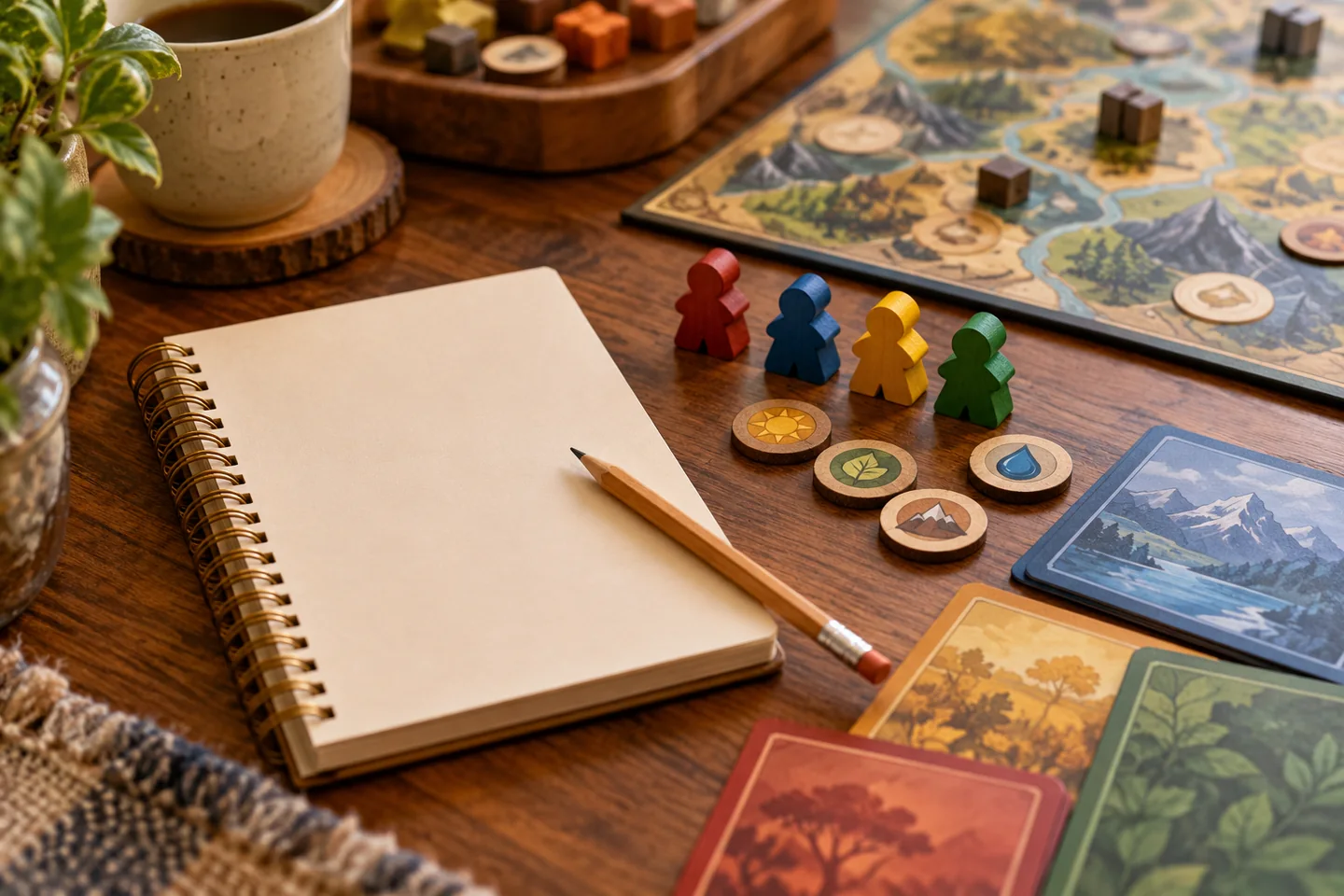
Was the table comfortable? Did the explanation land? Was the final round one round too many? These observations are more useful for next time than a score alone.
The hosting checklist can remember its ticks on this device. It does not create an account or invite anyone.
Keep a local checklist ↗COMMON TABLE QUESTIONS
Use the actual game’s rule if it matters. For an informal practice round, agree a volunteer or use our random chooser. It is a convenience, not a competitive fairness guarantee.
Ask the group and check how the game handles changing player counts. A practice round can be a low-pressure way to observe before committing to a full session.
Pause, explain the mismatch kindly and choose a shorter alternative. You do not have to finish a game to learn something useful about your table.

THE LAST MOVE
Sort pieces while the setup is still fresh in everyone’s mind. Note an unclear rule to check in the official rulebook before the next session.
A good finish leaves the table ready for another invitation, whenever the group wants one.
ABOUT THIS GUIDE
Pexarumi is an independent information project for Australian readers. The formats are editorial starting points. There are no paid rankings, ticket sales or claims of a real-world club.
Read our approach ↗Send an editorial question or tell us where an explanation could be clearer.